Waiting All Day for Sunday Night
Contemporary Fiction
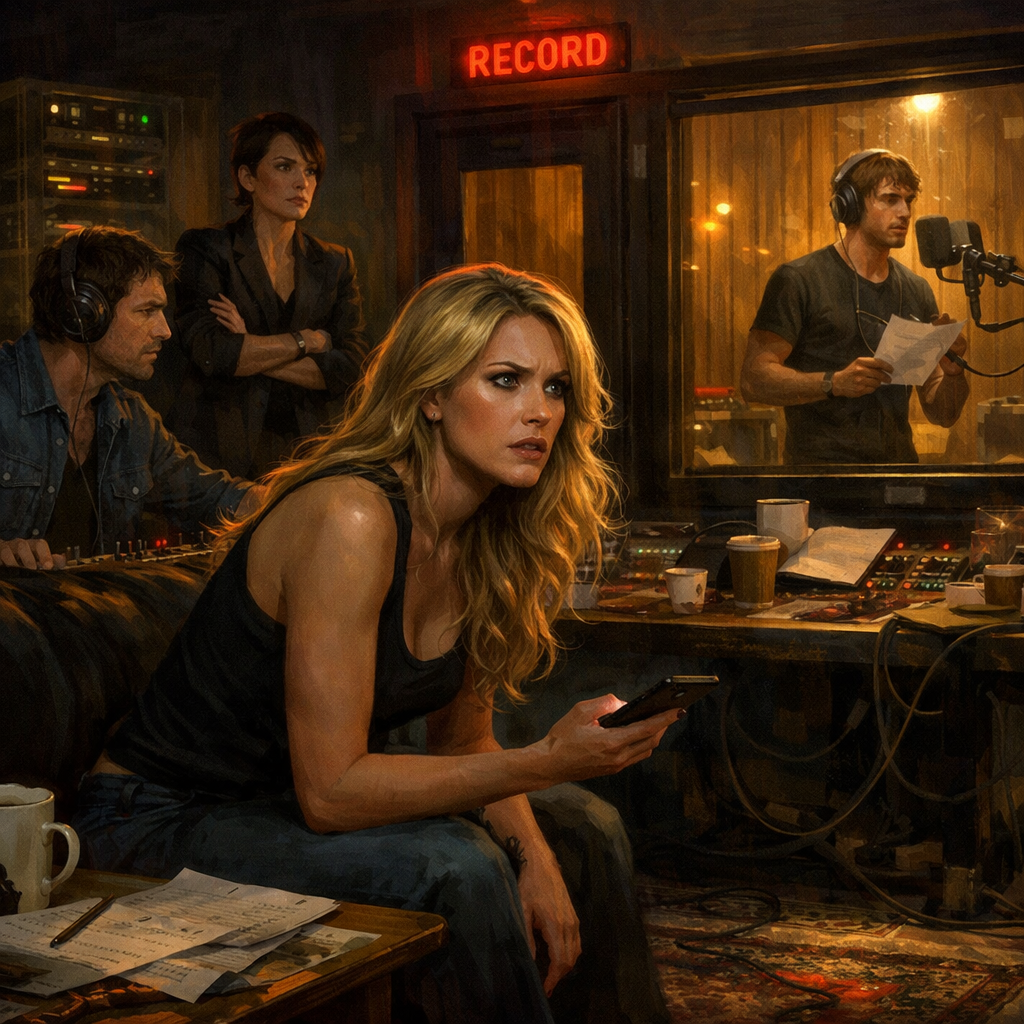
Mary Thunderwood wakes to the sound of her own voice—thin, distorted, leaking out of a phone speaker in the dark.
It takes her a second to realize it isn’t playing from her phone.
The hotel room is cold enough to raise gooseflesh on her arms. The blackout curtains make morning feel like midnight, and for a moment she forgets what day it is, what city, what version of herself she’s supposed to be. Then the lyric hits, unmistakable, half-sung and half-muttered:
Waiting all day for Sunday night—
Her stomach drops. That line is still supposed to be in pieces on a legal pad in her bag. Not out in the world. Not in someone else’s hands.
She sits up too fast and the room tilts. Her throat feels scraped raw, like she swallowed sand. On the bedside table, her own phone buzzes itself awake, lighting the glass with a dozen notifications.
LENI (3:12 AM): Call me. Now.
GABE: Don’t post. Don’t reply. Get to the studio.
UNKNOWN NUMBER: Cute demo. You want it gone? Answer.
Mary’s fingers hover over the screen, then pull back as if it’s hot.
A second phone chirps again—somebody’s, not hers—somewhere in the suite. The sound leads her to the sitting area where her assistant must’ve left a device charging. The audio is still playing, looping. A rough cut of her voice over a bare-bones guitar. Intimate. Unfinished.
Leaked.
Her first thought is practical in the way panic can be: I didn’t clear anything. I didn’t approve anything.
Her second thought is worse: That take is from the Chapel booth.
There are only a handful of people who’ve been in that room with her this week. A smaller handful who would recognize the breath she takes before the hook, the tiny crack she hates that always shows up when she’s tired and trying not to cry.
Mary presses her palm against her throat as if she can hold her voice in place.
She calls Leni. It goes to voicemail.
“Leni,” Mary says, and hears the edge in her own tone. “Pick up. Please.”
She tries Gabe next. He answers on the second ring, studio noise behind him—clacks, murmurs, a door closing hard.
“Tell me you’re in the car,” he says. No hello.
“I just woke up.” Mary swings her legs out of bed. The carpet feels gritty under her feet, like it’s been dusted with salt. “Is it real? Is that… is that me?”
“It’s you,” Gabe says, and she can hear him pinching the bridge of his nose, a habit he has when he’s doing math he hates. “And it’s everywhere it shouldn’t be. We’ve got six hours before the network hears it from someone who wants a favor. Maybe less.”
Mary’s pulse beats in her ears. “Who did it?”
A pause. Not long. Long enough.
“I don’t know,” he says finally. “But I know what they want. They want you scared. They want you to rush. They want you to take a deal you’ll regret.”
Mary closes her eyes and sees the studio: the red RECORD light, the honey wood walls, the way the Chapel booth makes you feel like you’re confessing into a void that remembers.
“What’s Leni saying?” she asks.
“She’s doing damage control,” Gabe says. “Meaning she’s trying to control you.”
“That’s not fair.” The words come out automatic, loyal by reflex.
Gabe’s voice drops. “Mary. Listen. The leaked cut isn’t the worst part.”
Her hand tightens around the phone. “What’s the worst part?”
“You’re not the one who sent it,” he says, “but it came from an account with your name on it.”
Silence fills the line like water.
Mary looks at her reflection in the dark TV screen: blonde hair a mess, eyes too alert for the hour, a woman who has learned to smile through anything—except this.
Outside, a siren whines and fades. Nashville waking up. The world rolling toward Sunday like it always does, hungry for a song that feels like a promise.
Mary swallows, and it hurts.
“Okay,” she says, voice steadying by force. “Tell me what to do.”
What happens next?
Want to riff your own version of this story? Get RiffRoc