Finding Purpose
Contemporary Fiction
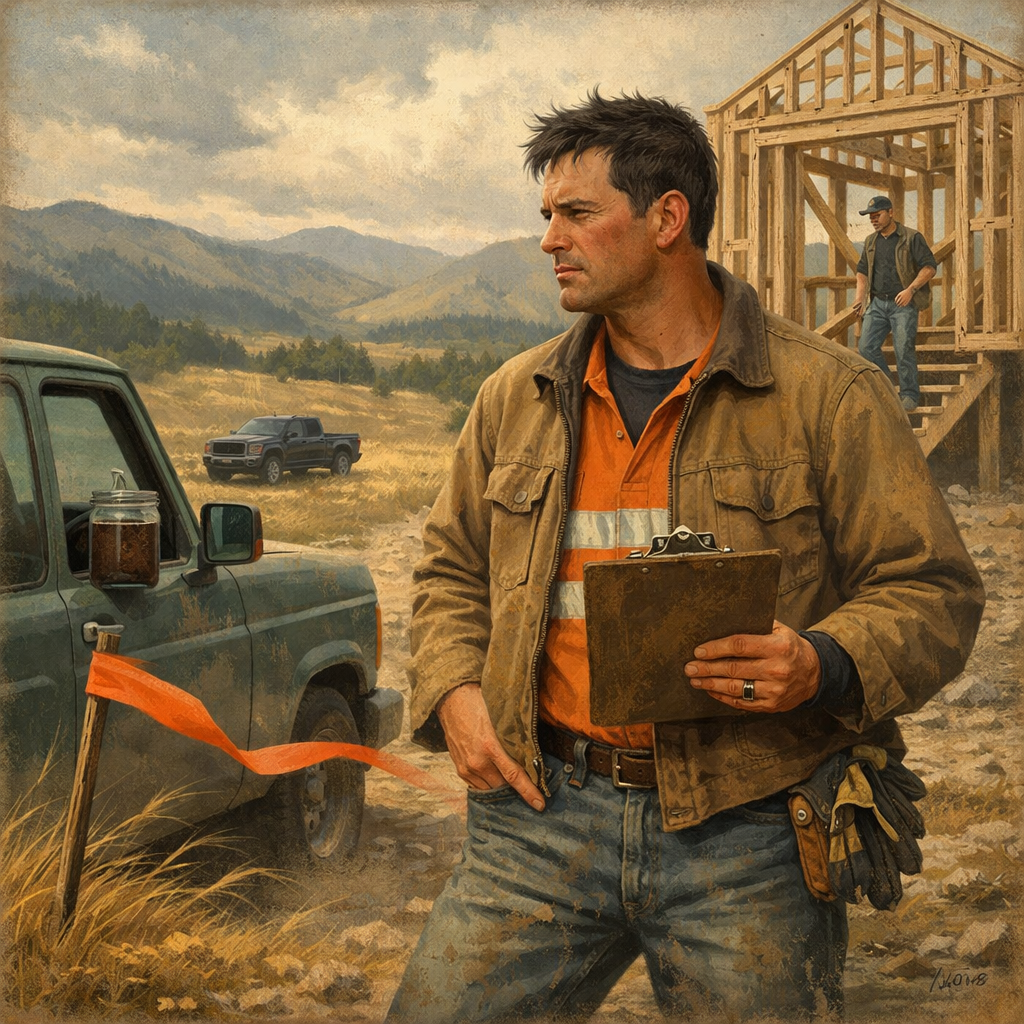
The mountain wind can make a half-built house sound alive. It finds the gaps in the sheathing and whistles through them like somebody trying to get your attention without walking up and saying your name.
I’m standing on the second-story subfloor of Unit 14, boots on plywood, clipboard tucked under my arm, and I can taste sawdust. The valley below is a clean postcard: the small city spread out in neat blocks, the river a dull ribbon, the foothills rolling into real mountains that don’t care about any of this. Up here, the only thing that cares is a schedule.
Wade climbs the temporary stairs behind me with the patience of a man who has been up since four and expects the rest of the world to apologize. He spits his toothpick to the side, misses, shrugs at his own failure like it’s my problem.
“You got him coming?” he asks.
“Yeah,” I say. I don’t add that I’ve been running the numbers in my head all morning, like a prayer I don’t believe in.
Ridgeview isn’t a single house. It’s a whole slice of mountainside shaved down and stamped into lots, and the developer, Dalton Pryce, talks about it like it’s destiny. He wants four units dried-in before the first snow sticks. He wants it fast because speed sells, and because the bank that’s backing him likes neat milestones. The way it works is simple: if we’re behind, Dalton squeezes. If Dalton squeezes, I squeeze the crew. If I squeeze the crew too hard, somebody quits or somebody gets hurt or both. And if the project tanks, it won’t be Dalton’s name on the next job board. It’ll be mine.
My phone buzzes in my pocket. Marisol’s name lights up the screen, then disappears before I can answer. No voicemail. That’s its own kind of message. She doesn’t usually call me during the day unless it matters, and lately “matters” has been anything that requires a decision I keep postponing.
The wind snaps something bright at the edge of my vision. An orange survey ribbon flutters from a bent stake near the property line, the kind of little marker you stop seeing once you’ve been on a site long enough. Today it won’t let me. It points downhill toward a patch of old pasture that hasn’t been scraped yet, grass flattened in the same direction like it remembers animals.
I try not to stare at it like it’s accusing me.
In my truck, there’s a jar of soil in the cup holder. Dark, almost black. I scooped it up last spring when I took the kids out to a friend’s place to help with planting. My oldest, Tavin, held the jar like it was treasure. “This smells like work,” he said, which is the most Idaho compliment a kid can give.
Agriculture doesn’t pay like construction. Everybody knows that. But when my hands are in dirt, my chest does this stupid, hopeful thing, like I’m not just building somebody else’s dream with other people’s money.
A diesel engine growls below us. Dalton’s truck. New. Shiny. It looks wrong against the mud.
Wade mutters, “Here we go,” and starts down the stairs.
I follow, already feeling the fork in the day: keep Dalton happy and keep the paycheck safe, or let myself look at that pasture like it’s an option and not a joke. My phone buzzes again, and this time it’s a text from Marisol.
Can you be home early. We need to talk about the fall.
The message sits there, plain and heavy, while Dalton’s boots crunch on gravel and the wind keeps whistling through the bones of the house.
What happens next?
Want to riff your own version of this story? Get RiffRoc