The Girl in the Plaid Pajamas
Historical Fiction
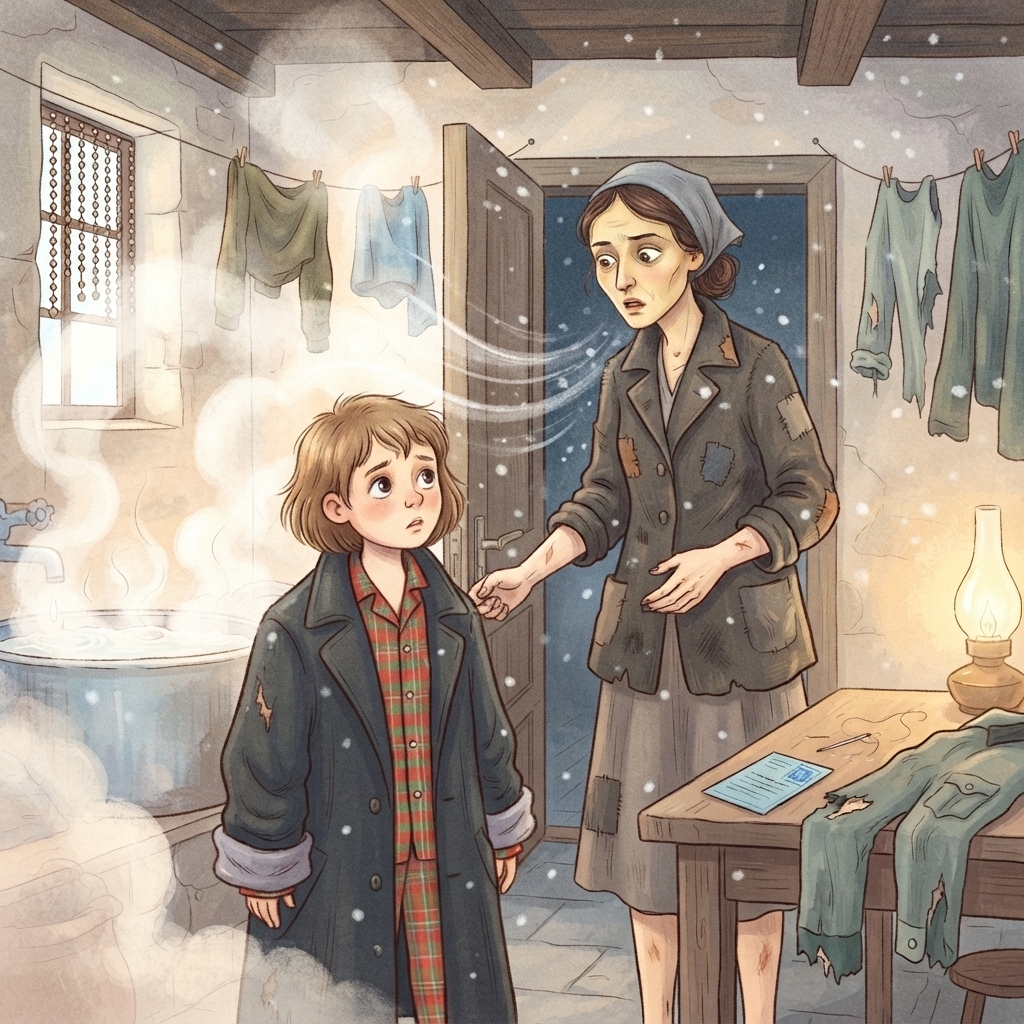
Kraków, 1943: after curfew, the city belonged to boots and paper.
I learned to hear the difference between them the way other women learned hymns. Boots meant men who didn’t need to ask permission to exist. Paper meant the rest of us, folded and refolded until the creases lived in our palms, until a blue stamp or a signature became more intimate than a kiss, more necessary than bread.
The laundry room in our tenement sweated even in winter. Steam climbed the walls and softened the mortar, beaded on the single window as if the glass itself were trying to hold its breath. The vat hissed; lye bit my nose; damp wool sagged from the clothesline like tired flags. I had been mending a torn cuff on a German field-gray shirt, needle slipping through cloth that would never warm the body it belonged to, when the siren began its low, steady wail. Curfew. The sound made the hairs at my wrist lift, because it didn’t mean go inside so much as it meant: be found, and you will be handled.
My ausweis lay on the table beside the thread. Work-pass. Permission. A narrow rectangle of card that said I was useful enough to be allowed to walk to the laundry and back, nothing more. The blue stamp at the bottom had started to smear from the damp; each day it looked less like authority and more like something that could be washed away.
The knock came wrong. Not the brisk rap of Marta upstairs when she wanted to borrow coal, not the heavy fist of a landlord collecting. This was a hesitant tapping, then a pause as if the hand on the other side didn’t trust the door.
I wiped my fingers on my skirt, though the ink stains never left. When I opened it a slit, cold air poured in, carrying street soot and the metallic smell of snow that had been stepped on too many times.
A child stood there.
She wore a man’s coat that swallowed her whole, sleeves rolled up twice. Under it, bright in the dim corridor, a plaid flannel pajama top showed at her throat and wrists, red and green crossing like something cheerful someone once chose on purpose. Not striped. Not uniform. Not what the city had trained me to expect from lost children.
Her hair had been cut short with no care for beauty. Her eyes were too big for her face, and in one small fist she held a tin button on a string, rubbing it hard with her thumb as the stairwell echoed with distant footsteps.
“Irena,” she whispered, as if my name were a place she had been told to run.
My body reacted before my mind finished its prayer. I stepped back and the door opened wider, letting her slip into the warm, wet air of the laundry room. The moment she crossed the threshold, the room changed; the steam felt less like work and more like concealment.
If Marta heard a child’s step above us, she would look through her peephole. If a patrol came down the corridor smelling of schnapps and power, they would ask for papers. A child without papers was not a misunderstanding. It was a sentence.
The girl’s gaze tracked the table where my ausweis lay, the blue stamp bleeding at the edges, and then she looked at me with the blunt, exhausted hope of someone who has already learned that kindness is always measured against fear. I could reach for the pass and the safe lies people used to survive, or I could close the door fully and make the kind of decision that leaves a mark no soap can lift.
What happens next?
Want to riff your own version of this story? Get RiffRoc