Cedar Road
Mystery & Crime
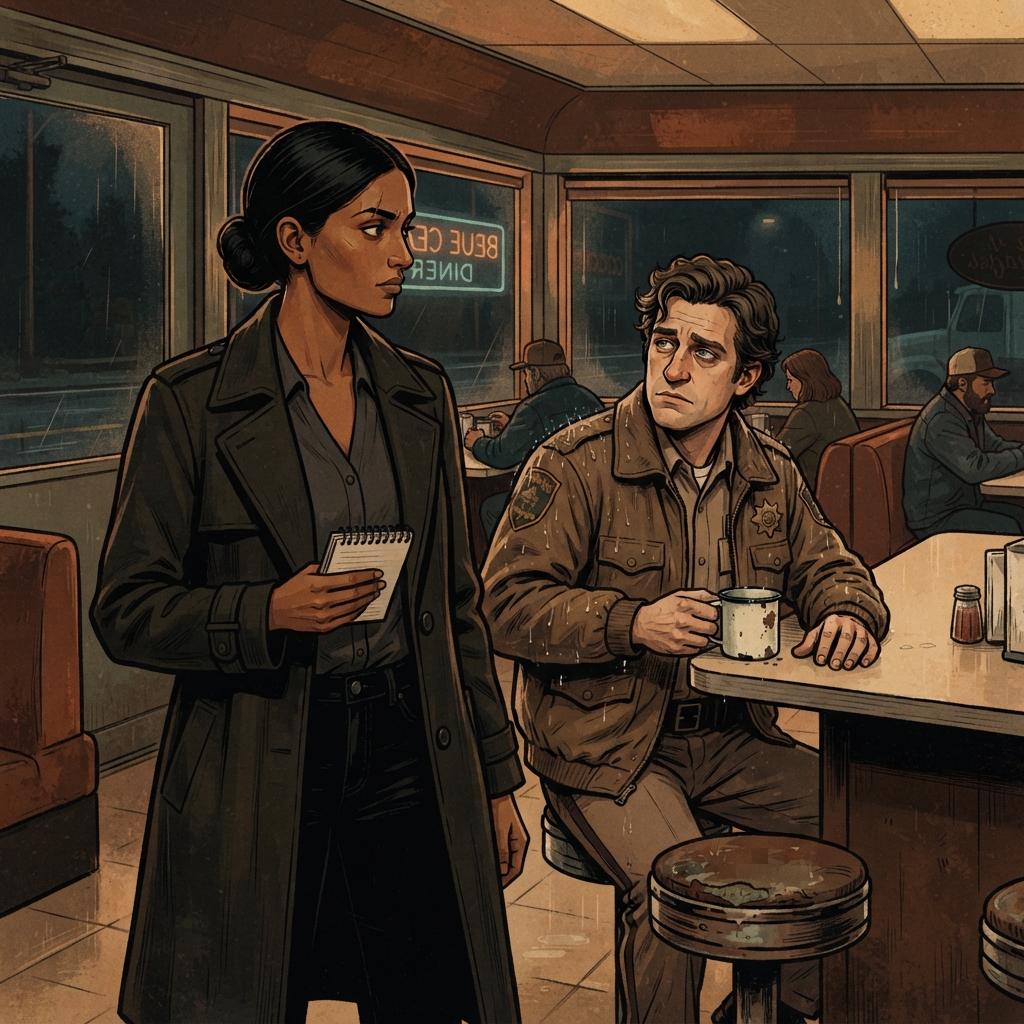
Cedar Road is only two lanes, but at night it feels like a throat—everything swallowed, everything forced through. My headlights catch the wet sheen of asphalt and the nervous shimmer of the Blue Cedar Diner’s neon, and the smell that slides in through the vents is the same as it was ten years ago: damp cedar from the sawmill, old gasoline, and coffee that’s been reheated until it turns bitter.
I tell myself I’m here because the call came up the chain and landed on my desk with the kind of shrug that means no one else wants it. Missing woman. Twenty-six. Name: Lacey Voss. Waitress. Last seen after closing, walking out the back door with her apron still on, like she thought she’d be gone five minutes and be right back to wipe down the counter. I’m here because the first forty-eight hours matter, because rain erases footprints and because a small town can turn absence into gossip before it ever turns into a search.
But the truth is simpler, and uglier. Cedar Road is a place that taught me how good I am at leaving. I never proved I’m any good at coming back.
Inside the diner the air is too warm and smells like fryer oil and cinnamon from the day shift’s attempt at comfort. A few truckers hold their mugs with both hands, as if heat can be hoarded. The locals keep their backs to the windows. When the bell above the door gives its tired jingle, a silence passes through the room that is practiced, quick, and complete.
Jonah Pike is at the counter, one elbow planted, shoulders rounded under a tan deputy jacket that shines with rain. He looks up like he’s already been expecting my face to step out of weather. His sandy stubble is darker at the chin where the damp clings, and the chipped enamel mug in his hand trembles once before he steadies it.
“You came,” he says. Not relief. Not welcome. Just a fact he can’t undo.
“I was the closest,” I lie, because the other truth—that I couldn’t stand the idea of someone else writing the report on Cedar Road—doesn’t belong in a room where people listen for weaknesses the way they listen for the weather.
He pushes the mug aside and slides a manila folder toward the edge of the counter. I don’t open it. Paper feels too final right now, too much like a story already chosen. Jonah’s gaze flicks to my left eyebrow, to the scar that splits it and makes my expression look perpetually unimpressed even when I’m trying to be kind.
“She didn’t come home,” he says, voice lowered, as if Lacey can still hear her own name and might flinch. “Her roommate called it in after noon. We checked her phone. Last ping was… here. Cedar Road. Around one twenty-seven.”
“Cameras?”
His mouth tightens. A small movement, but it lands like a closed door. “The pawn shop’s been out for weeks. Diner’s got one over the back door, but it’s been… glitching.”
Glitching is what people say when they mean someone made sure it wouldn’t see.
I look past him to the window. Outside, rain threads down the glass, distorting the road into a smeared ribbon of light. A car passes slow enough that I can hear the tires hiss, and for a moment the world is nothing but wet sound and the sweet, sharp breath of cedar drifting from the mill.
“Where were you when she left?” I ask, and Jonah’s hand clamps around the mug so hard the knuckles go pale. In the coffee’s surface, his wrist turns, and I catch the edge of a burn mark I don’t remember from when we were younger.
His eyes don’t leave mine. “Doing my job.”
The folder sits between us, unopened. The road outside keeps moving, patient and indifferent, and somewhere under that rain-slick blacktop, runoff funnels toward the culvert, carrying whatever the night is ready to let go of. Jonah’s silence is a warning, and it’s also an invitation, the kind that costs you either way.
What happens next?
Want to riff your own version of this story? Get RiffRoc